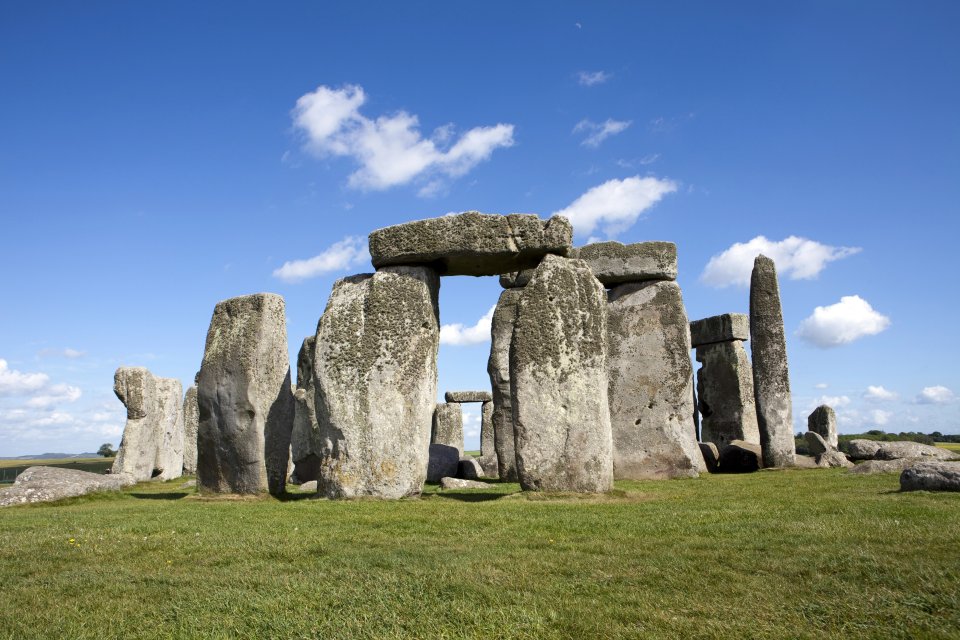
Stonehenge is the world’s most famous stone circle, visited by more than a million people each year. It stands as an icon for all that is mystical and awe-inspiring about humanity’s ancient past. For well over a century, people have gathered at the monument to celebrate the summer solstice. Although it was forbidden in 1985, the annual gathering resumed in 2000 and now collects a crowd of more than 30,000
Though there is no definite evidence as to the expected purpose of Stonehenge, it was supposedly a religious site and an expression of the power and wealth of the aristocrats and priests who had it built—many of whom were buried in the numerous barrows close by. It was aligned on the Sun and probably used for observing the Sun and Moon and working out the farming calendar. Or perhaps the site was devoted to the world of the ancestors, separated from the world of the living, or was a healing center.
Stonehenge was built in six stages between 3000 and 1520 B. C. E., during the transition from the Neolithic Period to the Bronze Age.

Na sajtu Bohemia.rs koristimo "kolačiće" i druge slične tehnologije, kako bi smo obezbedili rad određenih funkcionalnosti, za prikupljanje zbirne statistike i da vam ponudimo sadržaj, koji je relevantan vašim interesovanjima. Da bismo garantovali vaša prava, tražimo vašu saglasnost. Molimo vas, da pregledate u koje svrhe se koriste "kolačići".
