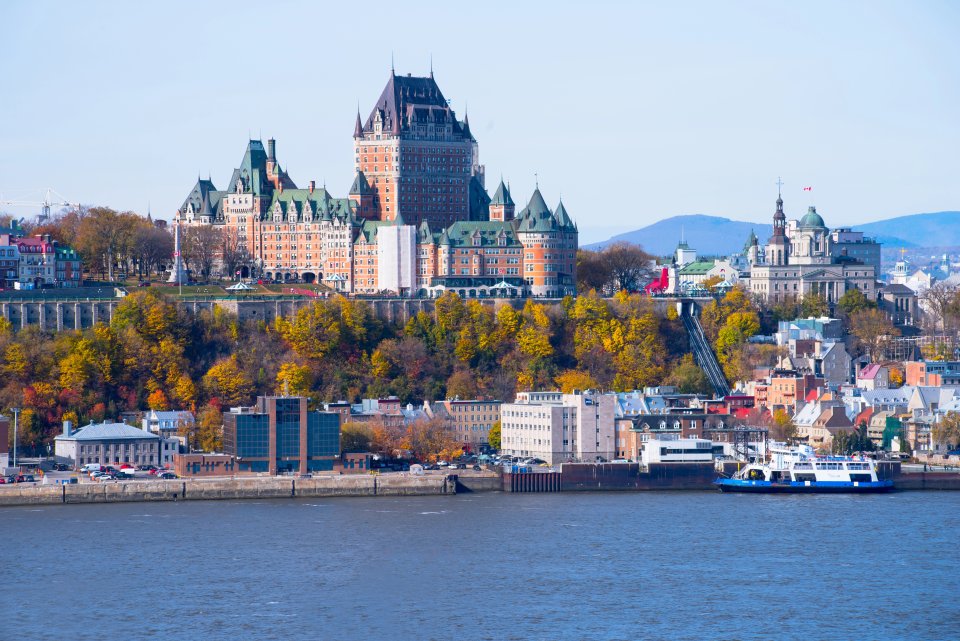
Quebec is the largest province in Canada. Its territory represents 15.5 per cent of the surface area of Canada and totals more than 1.5 million km2. Within the province’s three physiographic regions are four distinct zones with different landscapes. These are the arctic tundra, the taiga, the boreal forest and the temperate forest. All except the temperate forest are sparsely inhabited. The arctic tundra is the natural habitat of the polar bear, fox and arctic hare. In the taiga the largest group of the deer family is the caribou. Numerous species of animals like deer, coyotes, moose and lynx populate the boreal and the temperate forests. Quebec is also known for its countless lakes and rivers. The province’s most important waterway and geographical feature is the St. Lawrence River. Montréal is the economic and cultural centre of the province and it is also Quebec’s largest urban centre with a population of over 21 per cent of the Quebec population.

Na sajtu Bohemia.rs koristimo "kolačiće" i druge slične tehnologije, kako bi smo obezbedili rad određenih funkcionalnosti, za prikupljanje zbirne statistike i da vam ponudimo sadržaj, koji je relevantan vašim interesovanjima. Da bismo garantovali vaša prava, tražimo vašu saglasnost. Molimo vas, da pregledate u koje svrhe se koriste "kolačići".
