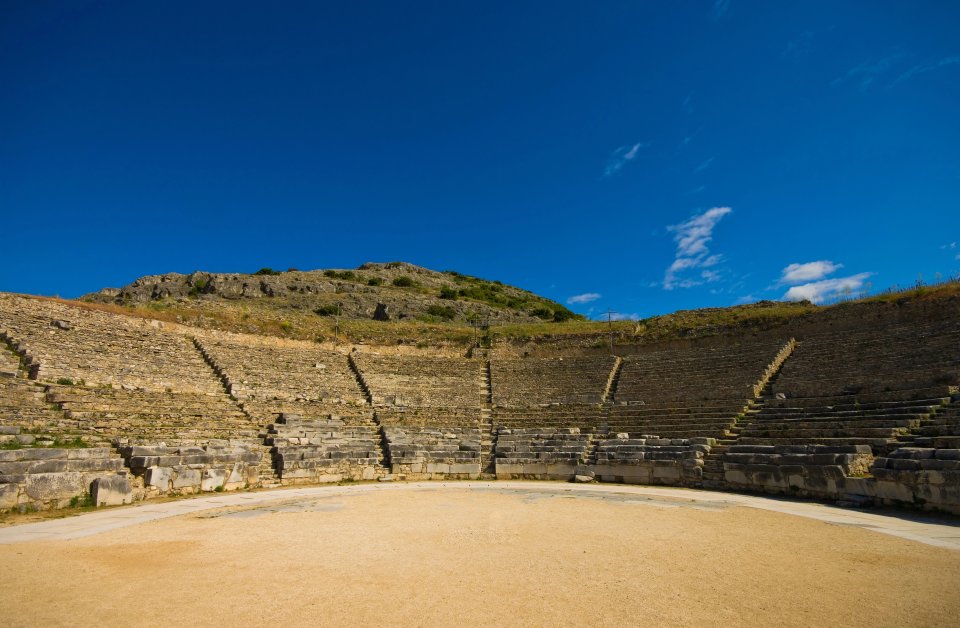
Philippi, hill town in the department of Kavála, overlooking the coastal plain and the bay at Kavála. Philip II of Macedon fortified the Thasian establishment called Crenides in 356 B.C. to control nearby gold mines. He borrowed a fortune from the gold mines but treated the city, renamed after him, as a “free city” with its own Greek constitution.
Site of the famous Battle of Philippi at the end of the Roman Republic, the city flourished in the Roman imperial era and, after a visit from St. Paul, became a significant center of early Christianity. Philippi continued to prosper as a major Byzantine city. Today the archaeological site has substantial remains including a theatre and four basilicas. Philippi is listed by UNESCO as a World Heritage Site.

Na sajtu Bohemia.rs koristimo "kolačiće" i druge slične tehnologije, kako bi smo obezbedili rad određenih funkcionalnosti, za prikupljanje zbirne statistike i da vam ponudimo sadržaj, koji je relevantan vašim interesovanjima. Da bismo garantovali vaša prava, tražimo vašu saglasnost. Molimo vas, da pregledate u koje svrhe se koriste "kolačići".
